

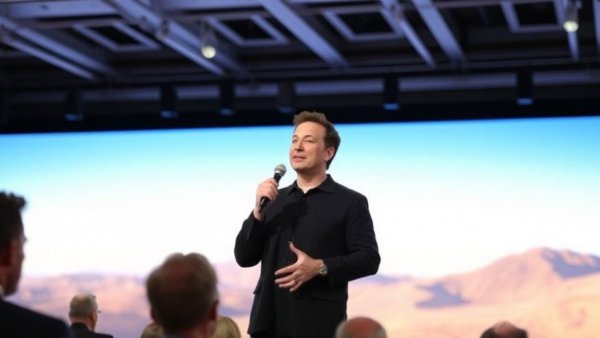
Elon Musk's Starlink: Bridging Connectivity Gaps Amidst Conflict
At the recent DealBook Summit, Elon Musk, the head of SpaceX, emphasized the potential life-saving capabilities of his satellite internet service, Starlink. He claimed that it might have saved ‘hundreds’ of lives, a striking assertion that has left many questioning the context of its use, particularly in regions like Ukraine where connectivity is critical for military and civilian safety.
A Closer Look at Starlink's Role in Ukraine
The ongoing conflict in Ukraine serves as a poignant backdrop to these claims. Ukrainian President Volodymyr Zelensky has reported severe disruptions in access to Starshield — the military-specific variant of Starlink — particularly during the recent wave of attacks from Russian forces. Without reliable connectivity, Ukraine’s ability to gather intelligence and respond effectively to threats is significantly hampered. Musk’s comments about the lives saved seem to overlook the critical situation where failure to provide consistent service can result in increased casualties.
Challenges with Starshield Accessibility
Despite Musk’s characterization of Starlink as revolutionary, the reality on ground shows considerable gaps. The limited access to Starshield has highlighted a crucial dilemma — while Starlink can offer essential connectivity, it has also become a potential tool for geopolitical maneuvering, raising concerns about corporate power in war-torn areas. Figureheads like Rebecca Solnit argue that Musk's significant earnings from the US government, coupled with his control over Starlink services, gives him undue influence in regions where every connection could be a matter of life and death.
Government Scrutiny and Accountability
Amidst this backdrop, government officials are beginning to question the accountability of SpaceX. Representative Jim Himes (D-CT) has reached out to Musk for clarity on the disruptions to Starshield in Ukraine, questioning whether these were directed by military officials or decided unilaterally by SpaceX. This inquiry highlights a broader issue — the implications of privatizing essential services during times of conflict and the risks associated with a single technology provider wielding such power.
Future Innovations and Connectivity Solutions
Musk continues to advocate for innovations that could extend Starlink’s reach, suggesting alternative setups like micro-ground stations to address service gaps. His vision points to a future where satellite internet might be even more ubiquitous, yet it raises the question: who controls this technology and how will it be regulated? As we continue to rely on private entities for public resources, the dialogues surrounding responsibility and ethics in technology gain critical importance.
Final Thoughts: The Duality of Technology
Elon Musk’s vision for a connected future through Starlink highlights the dual nature of technological advancements — they hold immense potential for good but can also exacerbate existing inequalities and power dynamics. As consumers, professionals, and policymakers, it’s essential to rethink how emerging technologies like Starlink are implemented, ensuring they serve the broader interests of humanity.








Write A Comment