


Did you know? More than 3 million U
Solar Lease and Purchase Options: Why Your Decision Matters
Choosing between solar lease and purchase options isn’t just about monthly payments or initial investments—it’s a decision that shapes your household’s energy future, financial wellbeing, and carbon footprint for years to come. Whether you’re looking for immediate budget relief, long-term savings, or the autonomy of owning your own solar system, knowing the facts helps you avoid buyer’s remorse and maximize incentives like the federal tax credit.
A solar lease lets you benefit from solar energy without owning the equipment, usually via fixed monthly payments with included maintenance. Meanwhile, purchasing solar panels (either outright or with a solar loan) offers you full ownership, unrivaled lifetime savings, and access to substantial tax incentives. Each option has its perks and pitfalls, impacting resale value, eligibility for government programs, and how much you’ll pay in total. Start here to explore which solar lease or purchase route best matches your goals, property, and finances.
The Rapid Rise of Solar Leases and Solar Panels in Residential Energy
Over the last decade, the number of solar installations in the U.S. has soared, with solar leases fueling much of this expansion. In many neighborhoods, solar panels are almost as common as mailboxes. Solar leases have become increasingly popular due to lower upfront costs and hassle-free agreements, opening the door for families that may not afford an outright purchase. Still, this growth means more homeowners are weighing solar lease and purchase options to find the most advantageous structure for their needs.
As more states roll out clean energy initiatives and local utilities offer attractive rates for solar energy, the adoption of solar panels and power purchase agreements continues to rise. Whether you opt for a lease, loan, or cash purchase, the influence of solar panels on energy cost and home value has never been greater. This rapid evolution means understanding solar lease and purchase options is no longer optional—it’s essential.

Fact or Fiction: Solar Lease Popularity and Cost-saving Data
Are solar leases really saving homeowners money? According to industry data, about 60% of residential solar installations used leases or power purchase agreements at the peak of their popularity
While solar leasing can indeed provide immediate utility savings without upfront costs, recent studies show that buying your solar installation—especially with incentives like the federal tax credit—yields the most substantial long-term savings. Homeowners who purchase typically see a payback period of 6-8 years, after which surplus energy is essentially free. Ultimately, the right choice is based on analyzing contract length, buyout clauses, and your ability to tap into purchase incentives.
What You’ll Learn About Solar Lease and Purchase Options
- The core differences between solar lease and purchase options
- How solar panels, power purchase agreements, and solar leases compare
- Financial and contractual elements like tax credit, upfront cost, and purchase agreements
- Who benefits most from solar leasing vs buying solar panels
- Critical questions to ask before making a decision
Understanding Solar Lease and Purchase Options
Defining Solar Lease, Solar Leases, and Purchase Agreements
A solar lease is a contract where a leasing company installs solar panels at your home, and you pay a fixed monthly amount for the energy produced or the use of the system—but you don’t own the panels. Instead, the leasing company owns and maintains the solar panel system, often handling repairs and monitoring as well. A purchase agreement, by contrast, means you buy the solar panel system outright or via a solar loan, gaining both ownership and all benefits associated with it. Power purchase agreements (PPAs) add another option: you pay a set price per kilowatt-hour generated by the system, typically lower than the local utility rate, but still, you don’t own the panels.
Solar leases and purchase agreements differ most in terms of ownership, responsibility, and eligibility for government incentives. If you opt to buy, you can claim the federal investment tax credit (ITC) and possibly state and utility-based tax incentives. With a lease or PPA, the solar company typically receives these credits and passes on some savings as lower monthly payments. Understanding the fine print of your agreements is essential—know who maintains the system, who benefits from excess energy credits, and whether you face fees for ending your lease or relocating.
Overview of Solar Panels & Power Purchase Agreements
Solar panels convert sunlight into electricity, reducing your home’s reliance on traditional energy sources and lowering your utility bills. With a power purchase agreement, a solar provider installs the system at no upfront cost, and you agree to buy the power it produces, usually at a discount compared to your typical utility bill. This structure is similar to solar leasing, with the crucial difference that PPA payments are based on actual power output rather than a fixed lease payment.
Many homeowners choose a PPA or lease to avoid high upfront costs, while those who purchase enjoy benefits like higher resale value and the ability to sell excess energy back to the grid. Purchase agreements clearly outline the terms—ownership, payment schedule, and tax credit eligibility. The best path depends on your financial situation, how much control you want, and how long you expect to live in your home.
"Choosing between solar lease and purchase options can mean the difference between upfront costs and long-term savings."
How Do Solar Lease and Purchase Options Work?
Solar Leasing: Structure, Solar Lease Contracts, and Maintenance
With solar leasing, you sign a multi-year contract (often 15–25 years) with a solar company, agreeing to fixed monthly payments or payments tied to the power the panels generate. The solar leasing company owns and maintains the system on your roof, handling repairs, monitoring, and occasionally insuring the equipment. This type of arrangement keeps your upfront cost minimal, making solar accessible and predictable.
Maintenance services are included in most solar lease contracts, relieving you of the hassle and costs of repairs or replacements. However, since the leasing company technically owns the solar panels, you’re unlikely to qualify for the federal tax credit, and transferring the lease if you sell your home can be complex. Still, the predictable monthly payment structure and “no surprise” approach are compelling for homeowners on a tight budget or with plans to move before the lease term ends.
As you weigh the pros and cons of leasing versus buying, it's also helpful to consider how broader energy policies and market trends can influence your solar investment. For example, shifts in government support or regulatory changes can impact the long-term value of renewable energy solutions. If you're interested in how political actions can affect clean energy jobs and the renewable sector, you might find this analysis of why political actions threaten offshore wind jobs in America particularly insightful.
Buying Solar Panels Outright: Upfront Cost, Ownership, and Tax Credit Benefits
Buying solar panels means you either pay the full cost up front or take out a solar loan to cover expenses, then enjoy full ownership benefits. While this means higher front costs—a national average of $15,000–$25,000 for a typical residential system—it also unlocks substantial savings and incentives. The most notable benefit: eligibility for the federal solar investment tax credit (ITC), which can reduce your tax bill by 30% of the installation cost, plus state and utility-specific rebates where applicable.
Ownership gives you control over maintenance, upgrades, and the ability to increase home value or sell excess power to the grid. With no ongoing lease payments, once the system’s paid off, you benefit from nearly free energy. It’s the ideal fit for homeowners planning to stay in their properties for more than 5–7 years who can handle higher initial costs or secure attractive solar loan terms. Weigh upfront costs against lifetime savings to decide if buying solar panels suits your needs.
| Feature | Solar Lease | Purchase (or Solar Loan) |
|---|---|---|
| Upfront Costs | Low to None | High (unless loan used) |
| Ownership | Leasing company | Homeowner |
| Monthly Payments | Yes (fixed or per kWh) | Loan payment or none (if cash paid) |
| Tax Credit Eligibility | No | Yes |
| Maintenance | Handled by leasing company | Homeowner responsible |
| System Upgrades | Limited by contract | Owner discretion |
| Resale Complications | Possible (transfer required) | Increases home value |
Comparing Main Solar Lease and Purchase Options
Solar Lease vs. Solar Loan: Key Differences
A solar lease offers very low or no upfront cost and bundles in maintenance, but you never own the panels. On the other hand, a solar loan lets you own the system after gradually paying down the loan principal and interest, benefiting from tax credits and long-term electricity savings. If you’re comfortable managing a loan and have a higher credit score, buying with financing can be more cost-effective over time—after loan payoff, your energy is basically free, while a lease locks you into ongoing payments.
Solar leasing is attractive for homeowners with limited savings, credit, or those who plan to move within a few years. However, a solar loan is best suited to those looking to maximize equity in their solar investment. Compare monthly payment amounts, the total cost of ownership or leasing over the contract term, and maintenance responsibilities before deciding. Use these factors to guide your solar lease and purchase options evaluation.
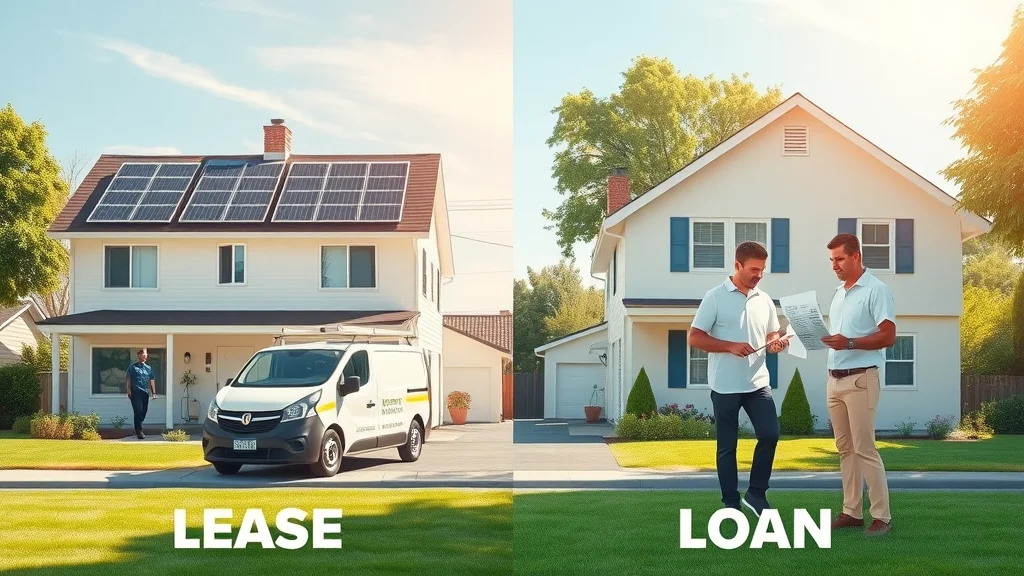
Power Purchase Agreement (PPA) vs. Traditional Purchase Agreement
Power purchase agreements (PPAs) and solar leases have similar structures—no upfront cost, no system ownership for the homeowner, and payments based on energy produced (with PPAs) or using a fixed rate (with leases). PPAs may provide the most flexibility, since you only pay for the electricity your panels actually generate. However, as with leases, you miss out on valuable tax credits and may face complicated requirements if you move.
In a traditional purchase agreement, you pay for and own your solar system from day one. This allows you to maximize tax credits, increase your property value, and benefit from lower monthly energy costs. Ownership gives you the greatest control and total long-term savings, but requires a greater upfront investment, either in cash or through solar loan financing.
Tax Credit, Upfront Costs, and Incentives for Solar Lease and Purchase Options
Only homeowners who buy their solar panel system—either with cash or a loan—can claim the federal investment tax credit (ITC), which is an immediate and significant reduction to your total installation cost. Leasing or entering a PPA means the installer or leasing company gets the tax benefit. Further, many localities and states offer solar tax incentives, utility rebates, or even zero down loan options for buyers, drastically reducing the true cost of the solar panel system.
For leases and PPAs, your incentives are usually baked into the monthly payment or per-kilowatt-hour rate, but you won’t be able to directly offset your own tax liability. Make sure to review the details with both your tax advisor and solar company, and ask if you’re still eligible for any residual local or utility-based incentives with your chosen solar lease and purchase options.
Pros and Cons of Solar Lease and Purchase Options
- Pros of solar leasing: Lower upfront costs, included maintenance
- Cons of solar leases: Limited ownership, potential long-term expense
- Pros of buying solar panels: Own your system, maximize tax credit
- Cons of buying solar: Higher front costs, responsibility for repairs
When exploring solar lease and purchase options, remember: leasing is best for those who want low initial spending and no maintenance, but it comes with limitations on tax savings and home equity. Buying solar brings the greatest long-term benefits, but requires more up front—and makes you responsible for all maintenance after your warranty ends.
Carefully weigh these pros and cons in light of your own circumstances. If immediate savings are non-negotiable, leasing can be a great starting point. If you’re planning for maximum return on investment and broader control, ownership makes the strongest case.
Who Should Consider Solar Lease and Purchase Options?
Best Fit For Solar Leasing: Who Benefits?
Solar leasing works best for homeowners with limited upfront capital, unpredictable credit, or uncertain plans to stay long term. If you prefer simplicity, want to avoid responsibility for system repairs, or are mainly motivated by predictable utility rates, a solar lease could be your ideal match. It’s ideal for younger buyers, retirees wishing to minimize hassle, and those with short- to medium-term housing plans.
Not all properties or budgets suit a major up-front investment, so consider your homeownership timeline, risk appetite, and tolerance for complexity. Lease agreements with flexible transfer options or buy-out clauses provide even more peace of mind for those who may move within the next decade.

Best Scenarios for Buying Solar: Ideal Homeowners
Buying solar panels makes the most sense for homeowners who plan to stay in their home for at least 7-10 years and who want to capture all available financial incentives. If you have the savings or sufficient credit for a solar loan, buying means greater lifetime savings, energy independence, and an increase in your home’s value. This is also the preferred choice for those ready to take responsibility for system maintenance after the included warranties expire.
Homeowners in regions with robust utility rebates, net metering, or high local energy costs particularly benefit from buying solar. It’s also the clear winner for anyone aiming to eventually pay nothing for household electricity.
"The long-term value of solar lease and purchase options depends on your financial goals and how long you plan to stay in your home."
Common Myths About Solar Lease and Purchase Options
Misconceptions Around Solar Lease and Power Purchase
Some people think solar lease agreements always cost less or that PPAs are risk-free for everyone. In reality, total cost depends on contract length, buyout and escalator clauses, and local utility rates. Others believe that you lose all flexibility when selling a home with a lease or that you can’t install solar if you have an HOA—but many leases now have easy transfer provisions, and most HOAs can’t restrict solar under state “solar access” laws.
Another persistent myth: that solar leases will always boost your home’s resale value. The truth is, unclear leases or restrictive agreements may actually complicate sales, especially if buyers aren’t aware of their benefits or obligations.

Clarifying Upfront Costs and Tax Credit Usage
Many assume all solar contracts include tax incentives or that there are hidden upfront fees with every solar lease. In reality, only system owners qualify for the federal tax credit—not renters or lessees. Transparent solar lease and purchase agreements disclose all up-front costs, and legitimate providers are clear about any payments due at signing. Before you commit, ask the solar company about all fees, how your payments are calculated, and how long it will take to see net savings.
Remember: the biggest savings are typically reserved for those who buy solar panels, especially with current government incentives in place. Avoid common misconceptions by reading the fine print and consulting with a reputable solar installer.
People Also Ask About Solar Lease and Purchase Options
Is it worth it to buy out a solar lease?
Answer: Buying out a solar lease can make sense if you plan to keep the property long-term, as you gain ownership of the solar panels and may qualify for additional value. However, it depends on the buyout cost compared to remaining payments and resale value.
What is the 33% rule in solar panels?
Answer: The 33% rule suggests that your energy bills should decrease by about a third after installing solar panels, but actual results for solar lease and purchase options can vary based on system size, energy use, and rate structure.
Is it better to lease or purchase a solar system?
Answer: That's determined by your financial capability, goals, and residency plans. Buying solar offers greater long-term savings and ownership benefits, while solar leasing minimizes upfront cost and responsibility for maintenance.
What is the downside of solar lease?
Answer: The primary downsides to solar lease options are lack of ownership and restrictions on tax credits, as well as potential transfer complications during property sale.
Step-by-Step Guide to Evaluating Solar Lease and Purchase Options
- Assess your financial situation and energy needs
- Compare solar lease, solar panel purchase, and power purchase agreement terms
- Calculate upfront costs vs. long-term savings for each purchase agreement
- Review eligibility for solar tax credit and local incentives
- Consult with solar leasing providers and reputable solar panel companies
- Decide which option aligns with your homeownership timeline and financial strategy
Engaging explainer video featuring clear animations showing the differences between solar lease and purchase options, scenes include homeowners weighing upfront costs and tax credits, contract signing, and solar installation, with voiceover and animated infographics. Background music is calm and informative.
FAQs on Solar Lease and Purchase Options
- Can I switch from a solar lease to owning solar panels? – Some leases include a buyout option, but terms vary by provider.
- What happens to my solar lease or purchase agreement if I move? – Leases can typically be transferred, but check for transfer fees or buyout options; ownership may boost resale value.
- How do power purchase agreements differ from solar leases? – PPAs bill you per kWh produced, leases offer fixed monthly payments regardless of output.
- Are solar lease payments tax-deductible? – Generally not; only buyers can claim the ITC.
- Do I need permission from my HOA to install with a solar lease? – Some HOAs have guidelines, but state laws may protect your right to install solar.
- Will a solar lease affect my home’s resale value? – Possibly; explicit, transferable lease terms are key to avoiding complications.
Key Takeaways: Making the Best Solar Lease and Purchase Choices
- Solar lease and purchase options offer different trade-offs in cost, maintenance, and ownership
- Carefully compare solar lease agreements, purchase agreements, and power purchase agreements
- Take advantage of tax credits where possible with purchases
- Your decision should align with long-term financial and property plans
Final Thoughts on Solar Lease and Purchase Options
Should You Choose a Solar Lease, Solar Loan, or Purchase?
Ultimately, the right solar lease and purchase option depends on your priorities. If upfront cost and maintenance-free energy are top concerns, leasing could be your path to lower energy bills. If you want maximum savings, investment returns, and to build equity into your property, buying—either outright or with a solar loan—delivers the strongest advantage. As technology evolves and incentives shift, reviewing updated agreements and consulting with trusted experts guarantees you’ll make the most of your energy future.

As you continue your journey toward energy independence, remember that the landscape of renewable energy is shaped by more than just personal choices—broader political and economic factors play a significant role in shaping opportunities and incentives. If you’re curious about how policy decisions can impact the future of clean energy and job growth, take a deeper dive into the dynamics at play by exploring how political actions threaten offshore wind jobs in America. Gaining a wider perspective on these issues can help you make even more informed decisions about your own solar investment and stay ahead of trends that may affect your home’s value and your community’s sustainability. The more you know, the better equipped you’ll be to maximize both your savings and your positive impact.
Get a Personalized Quote and Compare Solar Lease and Purchase Options Today
"Smart homeowners weigh all solar lease and purchase options before signing any agreement."
Buy Your New Home With Zero Down Reach Solar Solution




Write A Comment