

EV Market in China Reaches New Heights
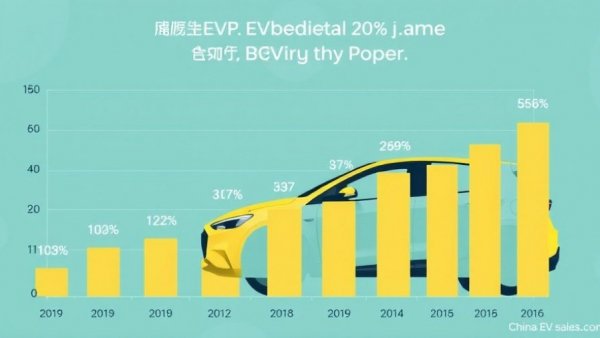
In a remarkable development, China's electric vehicle (EV) market has achieved a historic milestone: 68% market share for electric vehicles, an unprecedented record fueled by high gasoline prices and a steady influx of battery electric vehicles (BEVs). As internal combustion engine (ICE) sales witnessed a staggering 44% decline year-over-year (YoY), the overall car sales in China dropped around 27% to approximately 1.6 million units. This decline highlights the ongoing transition within the market, as consumers increasingly gravitate towards electrification.
The Rise of BEVs and Future Predictions
The latest figures indicate that battery electric vehicles alone constituted 40% of auto sales, compared to 33% in the previous year. By merging BEV figures with plug-in hybrid electric vehicles (PHEVs), the combined electric market share surged to a record 68%, suggesting a robust trend towards EV adoption. If this momentum continues, industry analysts forecast that the Chinese market could achieve full electrification by 2030, with a projected 100% BEV market by 2035. Such transformation holds significant implications for the traditional ICE industry, which finds itself increasingly on the defensive against the electrification wave.
Shift in Consumer Preferences and Market Dynamics
The current figures reflect a major disconnect between consumer preferences and the automotive offerings available in the market. While consumer interest in smaller vehicles such as hatchbacks and crossovers is surging, automakers have focused heavily on larger SUVs. In October, the B-segment/subcompact category stood out as the hottest segment, showcasing three of the top four bestsellers. Notably, while EVs dominate, the compact SUV, Toyota RAV4, remains the lone ICE representative in the overall top 10, further illustrating the ongoing transition.
Highlighting Best-Selling Models: The Competition Intensifies
October's top-selling electric models reveal fierce competition, particularly in the subcompact category. Leading the charge, Geely's Xingyuan recorded an impressive 50,190 units sold, an increase of 14% YoY, positioning it as a strong contender against BYD's new Seagull. Meanwhile, BYD Song, with a combination of BEV and PHEV, secured 2nd place with 30,772 registrations amid its transition to the new Ultra generation, featuring advanced technologies like lidar and rapid charging capabilities.
Understanding ICE Extinction: A Shift in Market Landscape
The remarkable rise of electric models has left no doubt about the industry's trajectory toward ICE extinction. With the top-selling vehicles in China dominated entirely by electric models, the question arises: what does this mean for the future of traditional car manufacturers? Automakers are pressured to adapt while navigating an increasingly competitive landscape where consumer preferences are shifting towards more sustainable options. The evolving market not only poses challenges for existing players but also opens up opportunities for new entrants focused on electric mobility solutions.
Conclusion: The Future of Automotive Sustainability
The narratives unfolding within China's automotive market present compelling insights into the future of mobility. With the electrification trend showing no signs of abating, understanding these dynamics is crucial for stakeholders across the industry, including manufacturers, consumers, and policymakers. As we step into a future increasingly defined by sustainability, staying informed is essential. The trajectory suggests that for both the environment and the consumer market, the adoption of electric vehicles is not merely a trend but a fundamental shift in the way we perceive and engage within the automotive space.






Write A Comment